
In 1888, Alfred Henry Gutheil of Gutheil Park Investment Company constructed Gutheil Park and Gutheil Gardens on what had been Arapahoe and Cheyenne ancestral land. This suburban park, where Generals Park is today, served as picnic grounds as well as a commercial nursery. The original gates remain at the southwest corner of the park. The park’s small pond, constructed in 1900, was subsequently established as a wildfowl preserve after Colonel Paul C. Hutton was gifted a few mallard ducks. Though relocated, the one-acre sanctuary exists today, is stocked with trout and protected by federal permit.
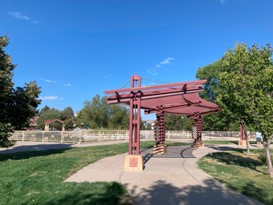
Governors Park ,with the enclosed pond in the background
When World War I created a need for treating the casualties from chemical weapon warfare, Denver was considered an attractive location. Its clean, dry air and reputation for treating tuberculosis made it an ideal site for US Army General Hospital No. 21 in 1918. By the 1920s, it was the largest tuberculosis hospital in the United States. In 1921, the base was r
Fitzsimons Army Medical Center Unit Crest
The buildings known as Colonel’s Row were built in 1920 and decommissioned in 1996. They continue in use todayenamed after Lt. William Fitzsimons, who was the first medical officer killed in WWI.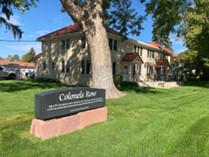
The golf course was built in 1918 to serve the patients, as recreation was part of their therapy. The tree-lined course was a favorite of former President Eisenhower in the 1950s and is now a cornerstone to the Fitzsimons Innovation Community.
Buildings on the bioscience campus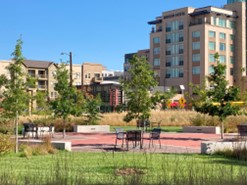
Built in 1942, Post Chapel is an interdenominational chapel featuring stained glass windows depicting each military branch and icons from Christian and Jewish religions. Following President Eisenhower’s stay at Fitzsimons Hospital, Mamie Eisenhower donated the chapel organ.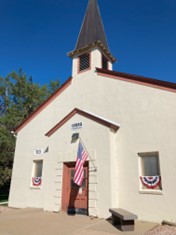
In 1938, a new main building – known as Building 500 – was approved. The largest structure in Colorado at the time, the building had 290,000 square feet, ten stories and 2,252 beds. It opened in 1941, just four days before the bombing of Pearl Harbor.
The back of the Fitzsimons Building showcases the architectural style and the multiple verandas used for exposing patients to the open air.
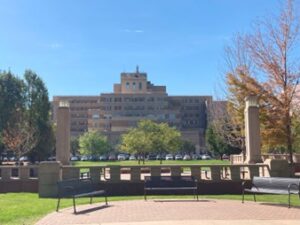
Main entrance to the Fitzsimons Building today.
Designed in the classic Mayan or wedding cake style, Building 500 featured seven colors of brick, Texas sandstone, Yule marble for its main entrance, Colorado travertine for its walls, granite for the entrance paving and curbs and cut stone decorative windows.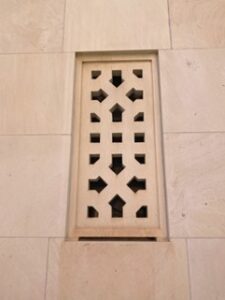
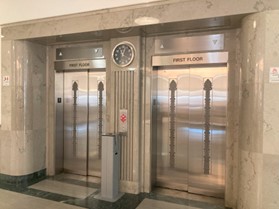
Renamed the Fitzsimons Building in 1996, after the base was decommissioned, its interiors feature intricate art deco finishes throughout, which have been maintained in its current use as a University of Colorado administrative building.
Mezzanine railing
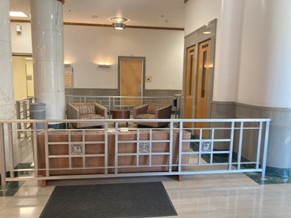
Detail from the mezzanine railings features pharmacy icons.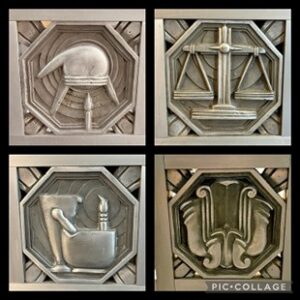
Art deco mailbox wall

The highlight of the Fitzsimons walking tour is a visit to the Eisenhower Suite on the 8th floor of Building 500. Opened in 2003, the restored rooms feature numerous artifacts from the time period such as glass ashtrays, a mechanical bed, nurse call buttons, an ensuite bathroom, nurse’s station, dining room and secret service sitting room.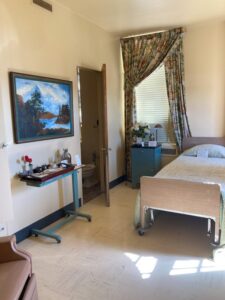
Inside the sitting room is the golden eagle that sat on top of the building’s flagpole and signified that Building 500 was one of seven US locations that served as a seat of government.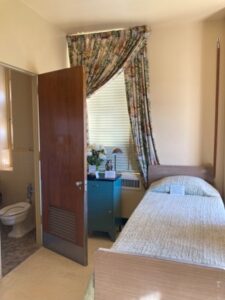
In the 1950s, President Dwight Eisenhower was treated at Building 500 multiple times. During a vacation at his in-law’s home in September 1955, Eisenhower suffered a myocardial infarction and spent seven weeks convalescing at Building 500. The entire eighth floor became the Western White House for Dwight, Mamie and his secret service detail. During his convalescence, Eisenhower took up painting for relaxation and one of his works hangs on the wall there for visitors to see.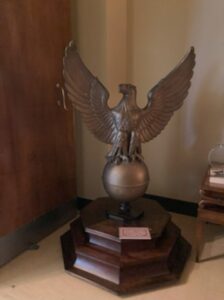
From the Eisenhower Suite, you can visit the roof deck where the former President would take in fresh air during his recuperation. Views include the walkway to the building’s entrance and the city of Denver.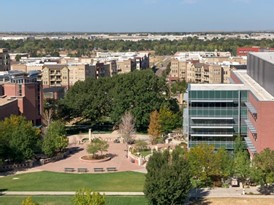
View from the roof terrace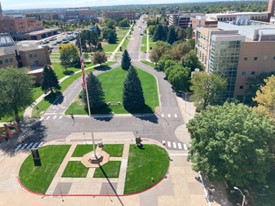
Promenade, viewed from the roof terrace
Down the hall from the Eisenhower suite is the 8th floor auditorium, named for Col. George E. Bushnell, who was responsible for inspecting and identifying the site of the future hospital in 1918. The auditorium served as a command post and office for Presidential Aide Colonel Robert Schultz, and a theater for Mamie and others to watch movies.
Bushnell Auditorium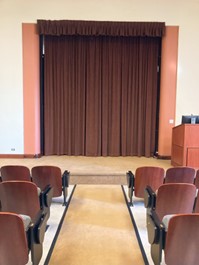
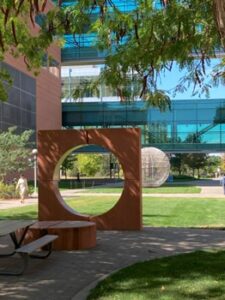
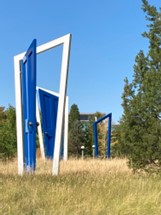
In 1996, the Army base was closed and the land released back to the city of Aurora. Discussions began for the redevelopment of the property for civilian use as the Fitzsimons Life Science District. Today, the former military base incorporates the University of Colorado Hospital and Children’s Hospital and the University of Colorado Denver medical education and research facilities, including the Ben Nighthorse Campbell Center for Native American Research. The site features abundant park space and public art.
.
Recent Comments