

In May of 2019, an exciting discovery was made at the Wind Crest Retirement Community in Highlands Ranch. During excavation for a new building, workers stumbled upon some bones. Unsure of their origin, they wisely halted construction and notified the appropriate authorities. It turned out to be dinosaur bones. Remarkably, not one, but at least three dinosaurs were found on the site at Wind Crest in Highlands Ranch.
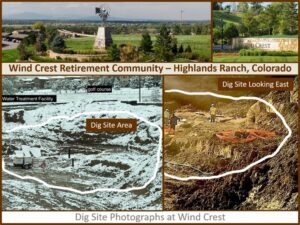
During the discovery of dinosaur bones, members from the Denver Museum of Nature and Science were present at the site. They carefully excavated various fossils, including bones like the scapula, humerus, and tibia. These were then preserved and transported to the Denver Museum of Nature and Science. The bones were generously donated by Wind Crest, owned by Erickson, the parent company.
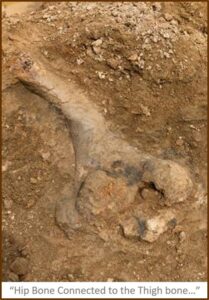
Photos from the dig in May 2019 show the excavation process. Following this, Wind Crest embraced the dinosaur theme and established Triceratops Park for the children of its residents. This park is located near where the bones were discovered, serving as a tribute to both the dinosaurs, and the land upon which they were found.
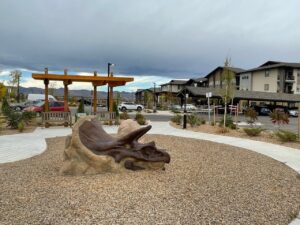
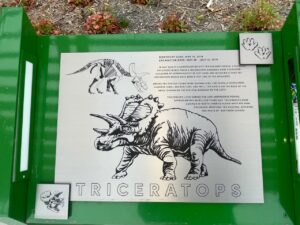
At Triceratops Park, there is a plaque detailing the primary bones found, identified as belonging to an adult and a juvenile triceratops, and likely a hadrosaur, described as a duck-billed dinosaur. The park features a large triceratops skull, benches, and an inscription at its southern boundary.
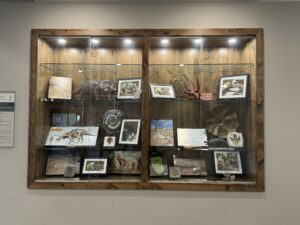
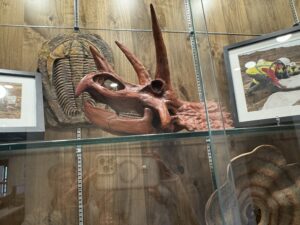
Wind Crest continued to celebrate their dinosaur discovery by installing a display cabinet in the hallway of the nearest residential building to Triceratops Park. This cabinet houses many photos from the dig, a triceratops skeleton and skull, and displays detailing the various bones found and the size of the triceratops.
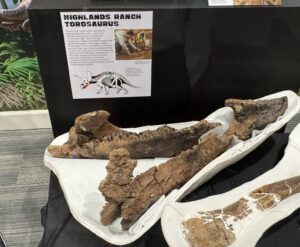
In Spring of 2025, the Aurora History Museum launched an exhibit titled “Prehistoric Aurora,” running until April 2026. This exhibit includes various dinosaurs and plaques describing life in prehistoric Aurora. It features a special section on the Highlands Ranch dinosaurs, where it was revealed that the large triceratops is actually a torosaurus. The exhibit explains that torosaurus might be the adult form of a triceratops. It includes one of the recovered bones, a detailed plaque about the torosaurus, and a photo display where visitors can pose with the triceratops and torosaurus, with a hadrosaur in the background. 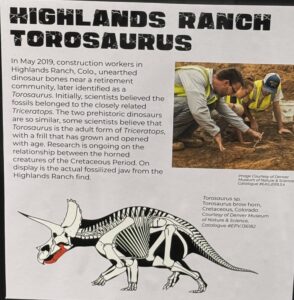
Here is a pictorial depiction of the differences between a Torosaurus and a Triceratops:
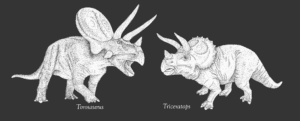
Torosaurus has a larger frill with holes, and are rarer to find as fossils. Triceratops = smaller solid frill and are more commonly found as fossils. Debate continues–are they distinct species vs. Adult Vs. Juvenile stages. Both lived in the Late Cretaceious (68-66 millions years ago.) In North American, often in the same regions.
This large photo display adds significant value to the exhibit at the Aurora History Museum. Visitors are encouraged to visit the museum before April 2026, snap of photo of themselves with the HR Torosaurus and share their photos on the museum’s Facebook page.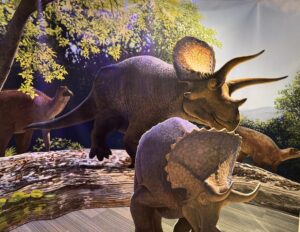
Click the VISIT THE PHOTO GALLERY HERE to see larger photos of the HR dinosaurs. 
Recent Comments